
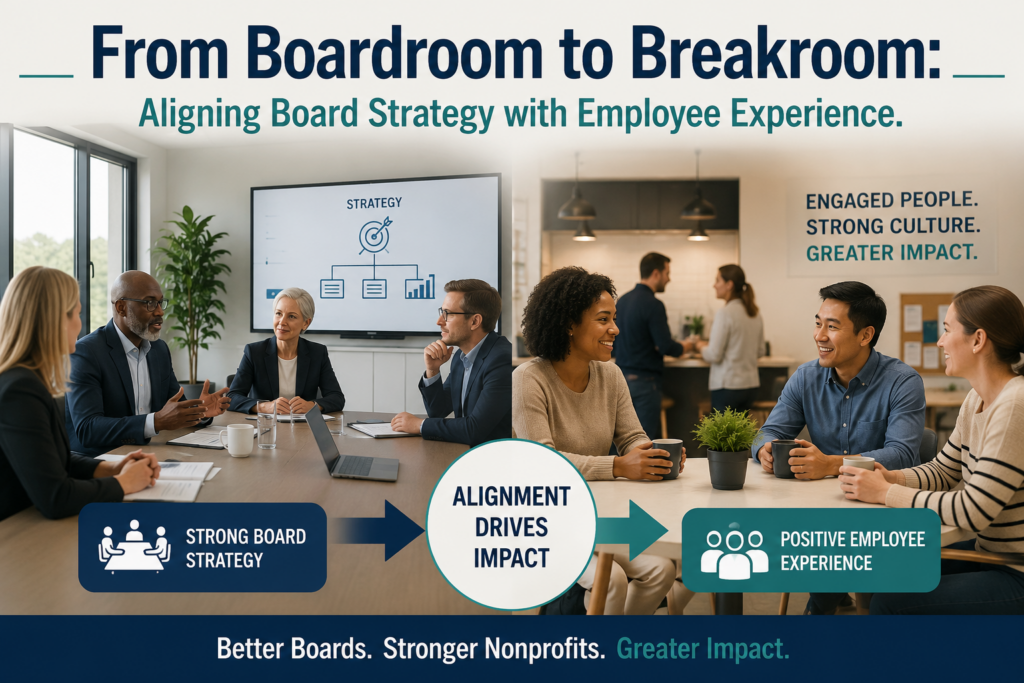
Nonprofit organizations are driven by a shared mission, but that mission can become disconnected from day-to-day work. Boards spend time setting strategic priorities, while staff focus on serving communities and keeping programs running. Somewhere between the boardroom and the breakroom, the vision can get lost.
Employees may feel unclear about priorities or unsure how their work supports long-term goals. At the same time, board members often have limited visibility into the challenges staff face each day. When board strategy and the employee experience aren’t aligned, nonprofit employee engagement suffers… and so does the mission.
Bridging the gap begins with understanding where the disconnect occurs.
The Gap Between Boardroom Decisions and Breakroom Reality
Many nonprofits develop thoughtful strategic plans that never fully reach frontline employees. Board discussions often center on governance and long-term growth, while staff are focused on immediate needs and working with limited resources.
Misalignment often appears as unclear communication, inconsistent messaging from managers or employees who aren’t sure what the organization’s priorities are. Over time, even passionate, mission-driven staff can become disengaged if they don’t understand how their work connects to the bigger picture.
Why Alignment Matters
Strong nonprofit employee engagement leads to stronger mission impact. Employees who understand organizational priorities are better equipped to serve constituents, represent the organization’s values and make decisions that support long-term goals.
Alignment also reduces costly turnover by helping employees feel connected to the mission. In resource-constrained organizations, retaining institutional knowledge is especially valuable. Likewise, boards that understand the nonprofit employee experience can make more practical, informed strategic decisions.
How to Bridge the Gap
When it comes to improving alignment, a few intentional practices can make a meaningful difference:
Translate strategy into mission-focused language. Explain strategic priorities in ways employees can connect to their daily work.
- Invite staff into the conversation. Engagement surveys, listening sessions and working groups help employees feel heard while providing leadership with valuable insight before priorities are finalized.
- Develop managers as the bridge. Managers play a critical role in aligning nonprofit strategy by helping employees understand organizational goals and how their work contributes to them.
- Close the feedback loop. Regular check-ins and pulse surveys help leaders understand whether messages are resonating. Sharing updates and acting on feedback builds trust and strengthens organizational culture.
Bringing Strategy to Life
The most effective nonprofits don’t leave strategy in the boardroom. They ensure every employee understands the organization’s direction and how their work advances the mission.
If you’re looking to improve nonprofit employee engagement, start by evaluating how board priorities are communicated throughout your organization. Even small improvements in communication and employee involvement can create stronger alignment, improve retention and help your organization make a greater impact.
Ultimately, when board priorities, leadership and employees are working toward the same mission, nonprofits are better equipped to serve their communities and create lasting impact.
Building that alignment starts with a strong organizational foundation. Learn how an HR ecosystem can reduce leadership stress and why HR assessments are a valuable first step in identifying opportunities to strengthen your people strategy.
This guest article has been provided by ProspectHR Consulting
ProspectHR Consulting partners with nonprofits and mission-driven organizations to strengthen leadership, improve workplace culture and build HR strategies that support lasting organizational success.