
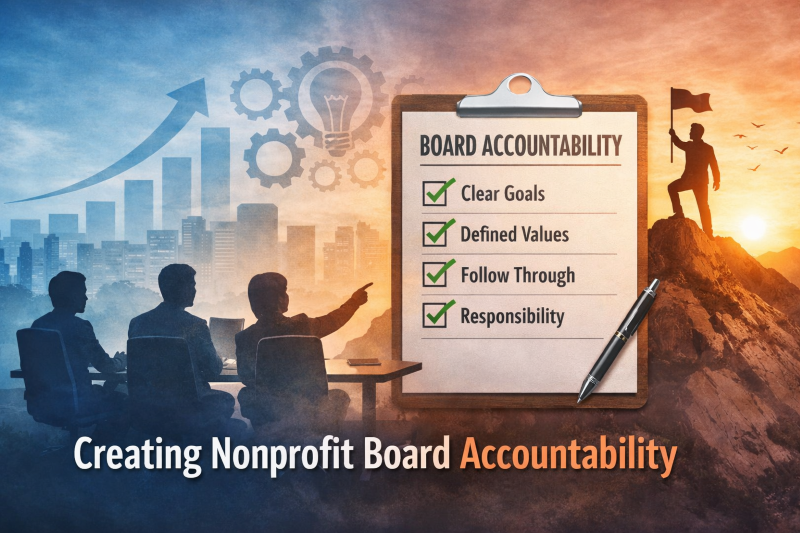
How can nonprofit organizations create a culture of accountability—one where commitments made in the boardroom actually translate into meaningful action?
Leaders of nonprofits, chambers of commerce, and associations frequently express frustration when board members fail to follow through. And as I shared in my book, Stop The Nonprofit Board Blame Game, board members themselves often feel discouraged when peers do not uphold their commitments. This shared frustration is rarely about effort alone—it is rooted in a lack of accountability.
For guidance that will help organizations create a culture of board accountability, I reached out to speaker colleague Sam Silverstein who is THE accountability expert.
Defining accountability
Sam defines accountability as keeping relational commitments rather than merely fulfilling responsibilities. In other words, accountability is not transactional—it is cultural. It emerges from a shared understanding of values and a collective commitment to uphold them.
He says accountability is not simply about checking tasks off a list. It is about honoring commitments to people, to purpose, and to the organization’s mission. When accountability is absent, intentions remain unfulfilled and progress stalls.
Creating a Culture of Accountability
Sam advises building a culture of accountability is conceptually straightforward, but it requires deliberate leadership and sustained effort. Organizations must move beyond informal expectations and clearly define what accountability means in practice.
According to Sam, this begins with values. If your board does not have clearly articulated values, accountability will always be inconsistent. Values serve as the foundation for behavior, decision-making, and expectations. They answer the question: “How do we show up for one another and the mission?”
He adds, Leaders must also ensure that these values are not just written, but actively communicated, reinforced, and modeled. Accountability cannot be imposed—it must be embraced. That requires buy-in from every board member, starting with leadership.
Recruiting board members who fit cultural standards
Sam emphasizes accountability is built—or undermined—during recruitment. Too often, organizations prioritize filling seats over finding the right people. This shortcut comes at a cost.
Strong boards are intentional about who they invite to the table. Beyond skills and connections, effective recruitment evaluates character, reliability, communication style, and alignment with organizational values.
As Sam stresses, leaders create the culture they deserve. If accountability is a priority, it must be reflected in who is selected to serve. Clear expectations should be communicated from the outset, including time commitments, participation standards, and behavioral expectations.
Purposeful recruitment is not about exclusion—it is about alignment. When board members understand expectations from day one, they are far more likely to meet them.
Maintaining Accountability
Sam points out establishing accountability is only the beginning. The real test is whether it is consistently upheld.
Maintaining accountability requires ongoing attention, not occasional correction. Boards must normalize conversations about commitments, follow-through, and performance. This includes setting clear expectations for each role, regularly reviewing progress, and creating space for honest dialogue when commitments are not met.
Equally important is peer accountability. Accountability should not rest solely with the board chair or executive director. Every board member shares responsibility for upholding the culture. When commitments are missed, it is not about blame—it is about ownership and course correction.
Leaders must also be willing to address misalignment directly. When a board member consistently fails to meet expectations or resists the organization’s values, inaction sends a powerful message—that accountability is optional. In these cases, courageous leadership is required, including difficult conversations and, when necessary, transitions of the board.
Accountability is sustained through consistency. What leaders tolerate becomes the culture.
Building a stronger board
Thank you Sam for sharing your valuable insight that will help nonprofit leaders create a culture of board accountability. To learn more about Sam and accountability, visit his website: www.SamSilverstein.com
Organizations that prioritize accountability create boards that are more engaged, more effective, and more aligned with their mission.
The choice is clear: accountability does not happen by chance—it is designed, reinforced, and protected.
If you want a board where commitments lead to results, start by defining your values, recruiting with intention, and holding one another to the standards you have agreed upon. When accountability becomes part of your culture, promises are no longer just words—they become outcomes.
That is when boards truly lead.